Cryptocurrencies
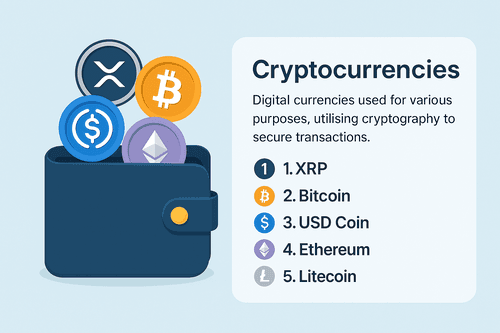
Cryptocurrencies are digital assets. They use cryptography to secure transfers. Many run on blockchains, where transactions are recorded and verified by a network.
What you can do
- Send value without a bank transfer.
- Hold assets in a wallet you control.
- Use apps for trading, saving, or lending.
What you must protect
- Your seed phrase.
- Your wallet approvals.
- Your device security.
What to watch
- Fees on each transaction.
- Volatility and slippage.
- Scams and fake support.
Bitcoin and Ethereum
Bitcoin
Built for peer-to-peer value transfer. Many people treat it as a long-term store of value.
Ethereum
A programmable network. It supports smart contracts and apps such as exchanges and lending platforms.
Key terms
- Wallet: software or hardware that stores keys used to control assets.
- Seed phrase: the wallet backup. Anyone with it controls the funds.
- Stablecoin: a token designed to track a currency value. It still carries risk.
- Gas fee: the network fee paid to process a transaction on chains such as Ethereum.
Risks and a safe first journey
Risks to understand first
- Price moves fast. Losses happen quickly.
- Links and approvals can drain wallets. Check what you sign.
- Transfers are hard to reverse. Wrong address often means lost funds.
- Scams target beginners. Fake sites and fake support are common.
A safe first journey
- Learn wallet basics using a test network or a small amount.
- Practice sending to your own second wallet.
- Write down your seed phrase offline. Store it securely.
- Only then explore exchanges, tokens, and apps.